The Silent Struggle of the Adult Amateur Rider
Monday, June 01, 2026
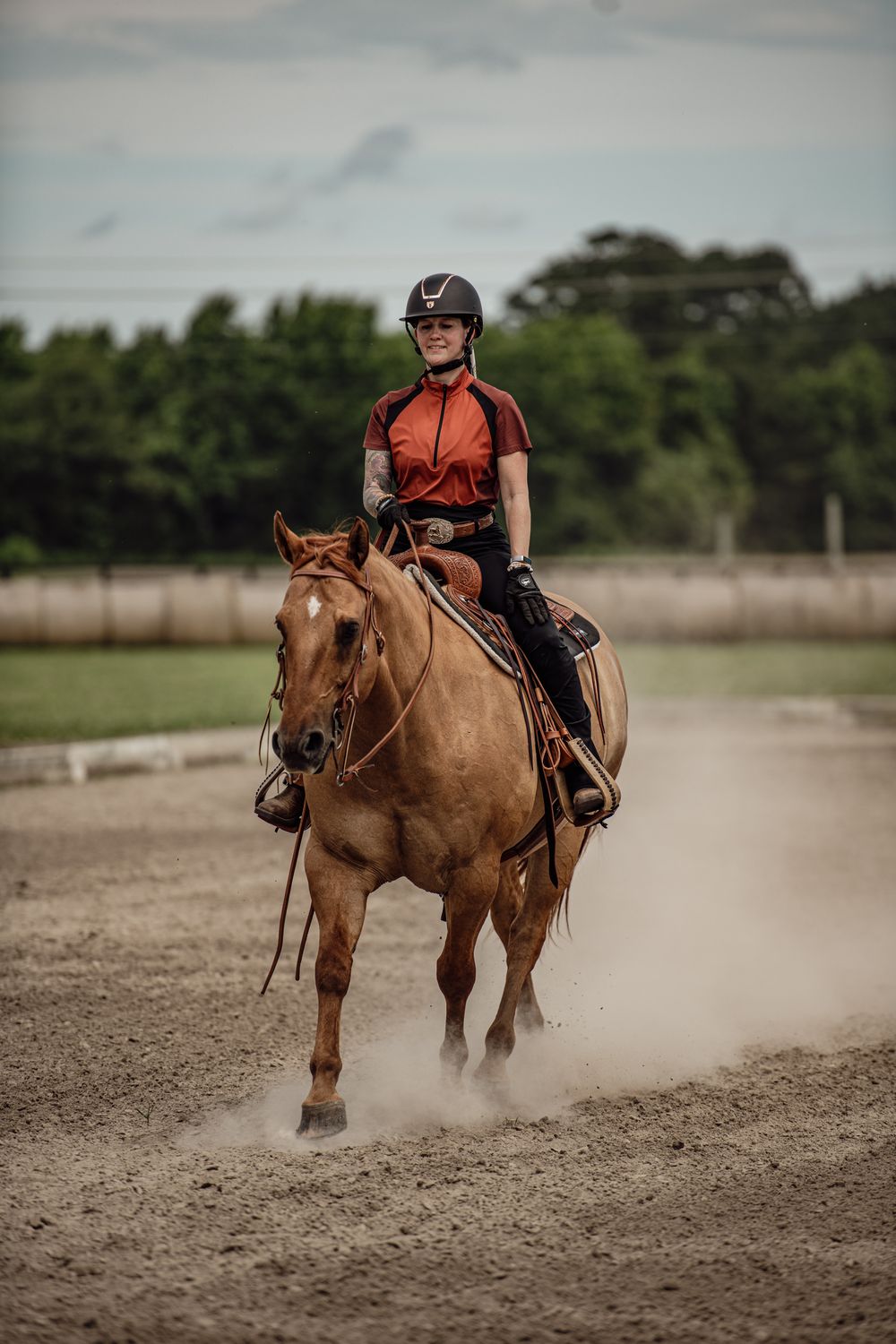
The Silent Struggle Adult Amateur Riders Carry
Why “Just Do It" isn't coaching for equestrian athletes.
Tiffany Pridgen
There is a version of the horse world we all know.
The early mornings.
The expensive lessons.
The truck packed before sunrise.
The horse show nerves.
The trainer’s voice in the arena.
The rider nodding along, trying to absorb every correction, every instruction, every expectation.
Heels down.
More leg.
Don’t pull.
Sit up.
Keep going.
You’re fine.
Do it again.
And the rider does it.
Again and again.
Even when their stomach is in knots.
Even when their hands are shaking.
Even when they do not fully understand what is being asked.
Even when the instruction makes technical sense, but does not land inside the body.
Even when they feel themself mentally checking out of the present moment and going into survival mode.
The rider smiles.
They nod.
They say, “Okay.”
They try harder.
They figure it out.
Because in the horse world, trying harder has become the answer to almost everything.
But here is the problem:
Many riders are not struggling because they lack work ethic.
They are struggling because they are carrying fear, confusion, insecurity, and pressure in silence...and calling it discipline.
The Adult Amateur Is Often Carrying More Than Anyone Sees
The adult amateur rider is one of the most emotionally invested parties in equestrian sports.
Most of us do not compete at the very top of our sport.
Most of us or somewhere in the middle.
Paying for the horse.
The board.
The farrier.
The vet.
The saddle.
The supplements.
The truck.
The trailer.
The lessons.
The show fees.
The training.
The lessons.
And often, we are paying for all of it while working full-time, raising a family, caring for aging parents, healing from old injuries, managing fear after a fall, or trying to reclaim a part of ourself we thought we had lost.
This is not a casual hobby.
For many adult riders, horses are not just a hobby. They are identity. Purpose. Partnership. Freedom.
A sacred thread back to the self.
So when the lesson does not go well, it is not just disappointing.
It can feel personal.
When the trainer says, “You just need to be more confident,” the rider may hear, “Something is wrong with me.”
When the trainer says, “Stop overthinking,” the rider may hear, “My brain is the problem.”
When the trainer says, “You need to trust your horse more,” the rider may silently wonder, “But what if I don’t trust myself?”
And because the horse trainer is often seen as the expert, the rider rarely questions the system.
But, we do start to question ourselves.
The Horse Trainer Is the Expert. Yes, But the Rider Is Half of the Partnership
This is where the horse world gets complicated.
More complicated than most sports.
Most riders deeply respect their trainers. They should. Horse trainers carry an enormous responsibility. They are managing horse behavior, safety, client expectations, business expenses, show schedules, training timelines, and the constant emotional labor of keeping both horses and humans moving forward.
Many trainers are overworked.
Many are underpaid.
Many are doing their best inside an industry that asks too much of everyone.
This conversation is not about blaming trainers.
It is about naming a gap in the industry.
Because in many equestrian settings, the trainer’s primary expertise is the horse.
Training the horse.
Developing the horse.
Conditioning the horse.
Preparing the horse.
Improving the horse’s rideability, strength, balance, responsiveness, confidence, and performance.
But the rider is not a passive passenger waiting to receive the finished product.
The rider is actually a huge part of the product.
The rider is part of the partnership.
And the industry would not exist without us.
If the rider is afraid, confused, dissociating, ashamed, or mentally overloaded, the horse feels that.
The horse feels the hesitation.
The holding in of the breath.
The collapse in the core.
The split-second delay between decision and cue.
The emotional noise underneath the ride.
So we have to ask a harder question:
What happens when the horse is being trained beautifully, but the rider is being coached generically?
“Just Push Through” Has a Cost
There is a certain kind of toughness that has always been celebrated in equestrian sports.
Fall off, get back on.
Be brave.
Don’t make excuses.
Ride the horse you have today.
Do the hard thing.
You wanted this, didn’t you?
There is wisdom in some of that.
Horses do require resilience.
Riding does require courage.
Progress does require discomfort.
But not all discomfort is growth.
Sometimes discomfort is a signal.
Sometimes fear is not weakness.
It is information.
Sometimes the rider who will not “just stop gripping” is not being dramatic.
She is overwhelmed.
Sometimes the rider who freezes before the jump is not being difficult.
Her nervous system has decided that survival matters more than performance.
Sometimes the rider who asks too many questions is not challenging authority.
She is trying to create enough understanding to feel safe.
Sometimes the rider who gets quiet is not checking out.
She has learned that honesty might be inconvenient.
And sometimes the rider who keeps saying “I’m fine” is not fine at all.
She has simply learned that “fine” keeps the lesson moving forward.
There is a coaching gap no one wants to name.
In many barns, there is an unspoken contract.
The trainer trains.
The rider listens.
The horse performs.
The system continues.
But what if the system is leaving too many riders behind?
What if the rider does not need more pressure, but more clarity?
What if the rider does not need to be tougher, but more supported?
What if the rider does not need to be told to “stop overthinking,” but to understand how her brain, body, and nervous system respond under pressure?
What if they don't need another correction shouted across the arena, but a coaching strategy that actually matches how they learn?
This is where equestrian sports have an opportunity to evolve.
Because riders are not all the same.
Some riders thrive with direct, no-nonsense instruction.
Some need detailed explanation.
Some need time to process.
Some need emotional reassurance before they can access physical skill.
Some need autonomy and collaboration.
Some need structure.
Some need repetition.
Some need help separating a mistake from their identity.
And some riders need someone to notice that the issue is not their effort.
It is their internal state.
Personality Matters in Equestrian Sports
The horse world talks constantly about horse temperament.
We ask:
Is the horse hot?
Is he sensitive?
Is she confident?
Is he spooky?
Is she dominant?
Is he dull to the aids?
Is she reactive?
Is he honest?
Is she trying?
We study the horse.
We adjust to the horse.
We build programs around the horse.
But we rarely ask the same depth of questions about the rider.
How does this rider respond to pressure?
How does she interpret feedback?
Does he need structure or freedom?
Does she shut down when corrected publicly?
Does he become perfectionistic when progress slows?
Does she need to understand the “why” before her body can organize the “how”?
Does he experience fear as a challenge, or as a threat?
Does she trust herself enough to make decisions in motion?
These questions matter.
Not because riders need to be psychoanalyzed in the arena.
Not because trainers need to become therapists.
But because personality shapes how riders experience coaching.
And personality shapes partnerships...especially with horses.
A correction is never just a correction.
It lands inside a human being with a complex personal history.
A rider who grew up being criticized may hear feedback differently than a rider who grew up feeling supported.
A rider with high standards may turn one mistake into a private character flaw.
A rider with anxiety may interpret normal arousal as danger.
A rider who values harmony may avoid speaking up, even when they feel unsafe.
A rider who is deeply conscientious may appear coachable while quietly drowning in self-pressure.
The outside behavior is only part of the story.
And in riding, the hidden story always finds its way into the body.
When the Rider Blames Themselves, the Partnership Pays the Price
Here is where this becomes more than a human confidence issue.
The horse is affected.
When a rider silently carries shame, fear, or confusion, the horse often becomes the place where that unresolved tension shows up.
The rider gets tight.
The horse gets tight.
The rider hesitates.
The horse loses confidence.
The rider over-reacts.
The horse becomes defensive.
The rider lacks confidence.
The horse feels the incongruence.
The rider walks into the show ring carrying every unspoken doubt from every lesson that did not feel safe enough to name.
And then when the performance falls apart, the cycle repeats.
More lessons.
More pressure.
More self-blame.
More “I just need to figure it out.”
But what if the rider cannot figure it out alone because the problem was never just technical?
What if the missing piece is not another lesson, another clinic, another bit, another saddle, another supplement, or another show?
What if the missing piece is a coaching model that sees the rider as a whole human being?
This Is Not About Making Riding Easier
Let’s be very clear about that.
We're all here and we know forming a trusting partnership with a 1000+ pound prey animal isn't easy.
This is not a call for soft, vague, feel-good coaching where riders never receive hard feedback.
Good coaching requires honesty.
Riders need correction.
Riders need accountability.
Riders need discipline.
Riders need to be challenged.
But challenge without psychological safety becomes pressure without purpose.
Correction without context becomes self-criticism and shame.
Intensity without trust becomes fear.
And standards without individualized communication often become silence.
The goal is not to remove difficulty from equestrian sport.
The goal is to stop confusing emotional suppression with mental toughness.
Because a rider who feels safe enough to be honest is not weak.
They are more available for learning.
A rider who can say, “I’m confused,” is not less committed.
They are giving the coach useful information.
A rider who understands her own personality, fear patterns, and learning needs is not making excuses.
They are becoming a more responsible partner for the horse.
The Future of Coaching Must Include the Rider’s Inner World
The horse world is already evolving.
We are talking more about welfare.
More about biomechanics.
More about nervous system regulation.
More about ethical training.
More about partnership.
But we cannot talk about partnership while ignoring the rider’s internal experience.
We cannot claim to prioritize the horse while dismissing the emotional state of the human sitting on the horse’s back.
We cannot build confident horses with riders who are quietly collapsing under the weight of unspoken pressure.
We cannot keep telling adult amateurs to be grateful for instruction while ignoring whether that instruction actually helps them learn.
And we cannot keep asking riders to “just be brave” when what they really need is to be understood.
The future of equestrian sport does not require trainers to become psychologists.
But it does require a more informed coaching culture.
One where riders are not labeled as difficult when they are overwhelmed.
One where fear is not automatically treated as weakness.
One where asking questions is not seen as disrespect.
One where personality is not used to box riders in, but to coach them better.
One where the rider’s nervous system is recognized as part of the horse-rider partnership.
One where the human is not treated as the problem to overcome, but as part of the relationship to support.
Maybe the Rider Was Never the Problem
Maybe the rider who keeps struggling is not broken.
Maybe she is not too sensitive.
Not too anxious.
Not too slow.
Not too complicated.
Not too emotional.
Not too much.
Maybe she has been trying to succeed inside a coaching model that was never designed to understand her.
Maybe she has been carrying the burden of translating technical instruction into emotional safety all by herself.
Maybe she has been blaming herself for a mismatch that no one ever taught her how to name.
And maybe the next evolution of equestrian sport is not asking riders to toughen up.
Maybe it is asking the industry to become more intelligent about the human being in the saddle.
Because the rider matters.
Not more than the horse.
But not less than the horse either.
The horse-rider partnership is built between two living nervous systems. Two bodies. Two histories. Two emotional realities meeting in motion.
And if we want better partnerships, safer rides, stronger performances, and healthier horses, we have to stop pretending the rider’s inner world is separate from the ride.
It never was.
A Question for the Horse World
So where do we go from here?
Is it the rider’s responsibility to know herself deeply enough to adapt to any coaching style?
Is it the trainer’s responsibility to adapt their communication to the rider in front of them?
Or is the real answer more uncomfortable?
Maybe both are true.
Maybe riders need more self-awareness, more language, and more courage to advocate for what they need.
And maybe coaches need more tools, more support, and more willingness to see that training the horse and coaching the rider are not separate jobs.
Because the horse already knows.
The horse feels the truth of the partnership long before the industry is willing to talk about it.
I'm curious to know how this lands with you.
Do you think riders should be responsible for adapting to their trainer’s coaching style? Or should trainers be expected to adapt their communication to the rider’s personality and learning needs?

The Equestrian Yogi © 2026 | Glow Yoga, LLC | All Rights Reserved
Terms | Privacy | Disclaimers
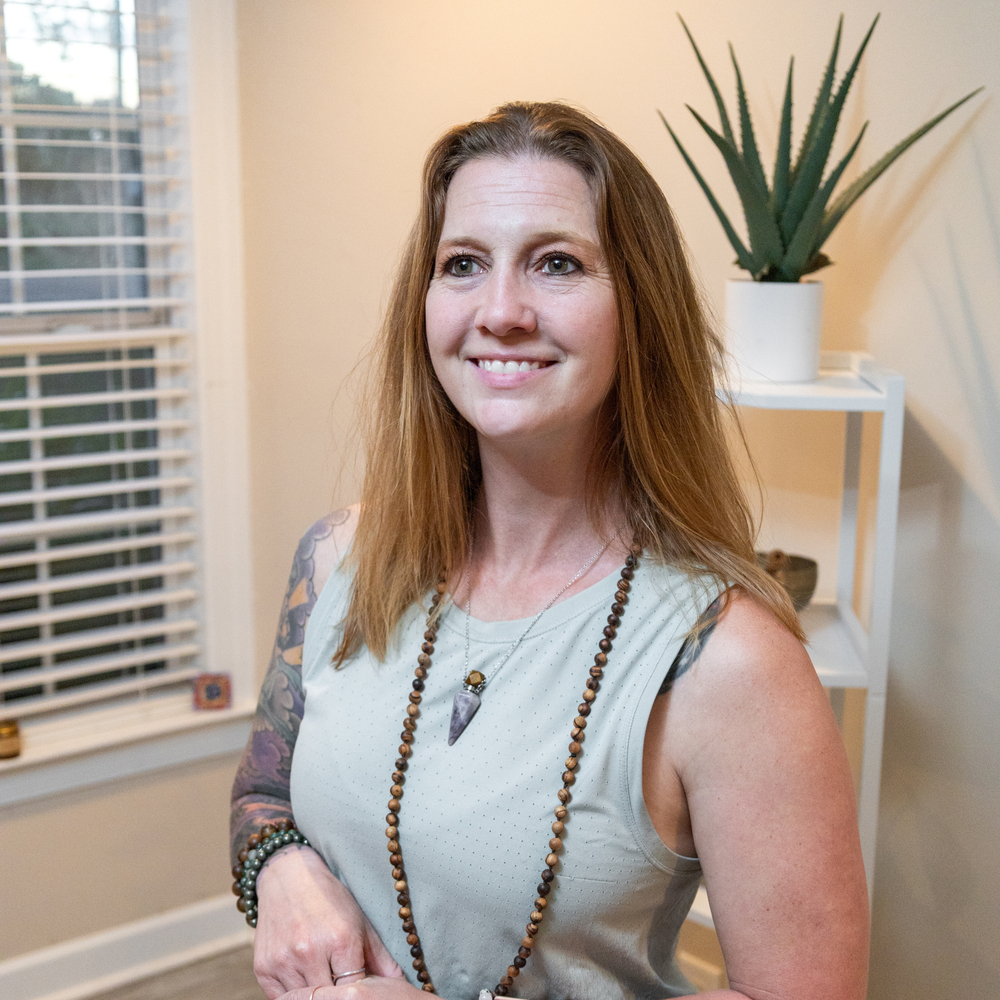

Hi, I'm Tiffany
Neuroscientist, Colic Researcher, Lifelong Equestrienne, Creator of The Resilient Rider
I'm a horse crazy little girl who never grew out of her "I want a pony" phase!
My entire life revolves around horses & I wouldn't have it any other way!
I'm a colic researcher by day & yoga teacher and energy worker by night!
I've spent the last 20+ years studying neuroscience and yoga and my passion is bringing all that I've learned about the mind-body connection to the equestrian community!
I create unconventional courses and workshops that help ambitious equestrians from all backgrounds elevate & understand their relationships with their horses and themselves through yoga.
